Vitamin K is a family of fat-soluble naphthoquinones essential for blood coagulation, calcium metabolism, and cellular energy production. The name derives from the German "Koagulation." While historically viewed as a single vitamin, K1 and K2 have distinct sources, tissue distributions, and biological activities. K2 is further subdivided into menaquinones (MK-4 through MK-13), with MK-4 and MK-7 being the most studied.
| Vitamin K | |
|---|---|
 Vitamin K molecular structure | |
| Vitamin name | Phylloquinone (K1), Menaquinone (K2) |
| Chemical formula | K1: C₃₁H₄₆O₂ / MK-4: C₃₁H₄₀O₂ / MK-7: C₄₆H₆₄O₂ |
| Solubility | Fat-soluble |
| Discovery year | 1930s (Nobel Prize 1943) |
| Daily requirement (RDA) | 90–120 mcg |
| Upper limit | |
| Rich food sources | K1: Well cooked leafy greens Recipe, milk, cheese, eggs K2: Hard cheeses, liver, egg yolks, dark chicken meat, grass-fed butter |
| Ray's verdict | |
Dosing
[edit]| Goal | Form | Dose |
|---|---|---|
| Basic maintenance | K1 or K2 | 100–200 mcg/day
|
| Aspirin protection | K2 | 500 mcg–1 mg/day
|
| Osteocalcin carboxylation (minimum) | MK-4 | 1 mg/day
|
| Bone/muscle/brain benefits | MK-4 | 1–5 mg/day
|
| Therapeutic (osteoporosis, calcification) | MK-4 | 10–45 mg/day
|
| Weekly high-dose approach | MK-4 | 45 mg once weekly
|
Notes:
- Take with fat for absorption
- Olive oil is a preferred vehicle; avoid MCT oil orally (topical use acceptable)
- MK-7 has longer half-life (~72 hours) vs MK-4 (shorter), affecting dosing frequency
Positive interactions:
[edit]Vitamin K2 guides calcium to the bone and teeth while also removing it from arterial plaque.[1]
Structure/Chemical Properties
[edit]All vitamin K forms share a 2-methyl-1,4-naphthoquinone (menadione) ring structure. The difference lies in their side chains:
- K1 (Phylloquinone): Phytyl side chain; found in plants
- K2 (Menaquinones): Isoprenoid side chains of varying lengths
- K3 (Menadione): Synthetic, no side chain; banned for human use in the US due to toxicity
The quinone structure allows vitamin K to function as an electron carrier, similar to CoQ10.
Function/Mechanism of Action
[edit]Serum vitamin K was the strongest biomarker distinguishing depressed patients with suicide attempts from controls, with 84.2% sensitivity and 71.5% specificity; the suicide-attempt group also had lower vitamin D, total cholesterol, and free thyroxine (FT4), and higher C-reactive protein (CRP), alongside the low vitamin K.[2] A cross-sectional analysis of 4,375 adults aged 45-79 found people in the highest quartile of dietary vitamin K intake had significantly lower odds of depressive symptoms after adjusting for 11 confounders; the association held only in people not taking vitamin D supplements, suggesting some overlap between the two nutrients' effects.[3] Dietary menadione bisulfite, a pro-oxidant vitamin K precursor, suppresses prostate-cancer progression in mice by oxidatively inhibiting the PI3K VPS34 endosomal kinase, contrasting with antioxidant vitamin E's association with higher prostate-cancer risk in trials.[4] Low vitamin K status associates with worse spirometry, higher COPD and asthma prevalence, and increased wheeze in a large prospective cohort.[5] "It has many effects, some of them prevent abnormal clotting, others abnormal bleeding, others favor energy production and brain lipid synthesis, calcium regulation." - Ray Peat
Vitamin K serves as a cofactor for gamma-glutamylcarboxylase, which activates vitamin K-dependent proteins (VKDPs) via carboxylation:
| Function | Mechanism |
|---|---|
| Blood clotting | Carboxylates clotting factors (II, VII, IX, X) and anticoagulant proteins S and C in the liver |
| Bone mineralization | Activates osteocalcin, directing calcium into bone matrix |
| Soft-tissue decalcification | Activates Matrix Gla Protein (MGP), preventing arterial/kidney calcification |
| Energy production | Acts as alternative electron carrier, supporting CoQ10 function |
| Steroidogenesis | Facilitates cholesterol import into mitochondria for testosterone/progesterone synthesis |
| Insulin regulation | Activates ERGP protein in pancreatic beta-cells, regulating calcium flux and insulin secretion |
Vitamin K is activated by carbon dioxide, adequate thyroid function and carbohydrate intake support this process.
Vitamin K sits at the center of calcium regulation. It protects arteries from calcification, allows bone to use carbon dioxide, and carboxylates the proteins that bind calcium into bone.
It happens to be a pretty expensive vitamin, but it is right at the center of the regulation of calcium. It protects your arteries from calcification, and it allows the bone to use carbon dioxide. It carboxylates the proteins that bind calcium into the bone.
— Ray Peat[6]
Medical Uses/Effects
[edit]Vitamin K3 inhibited SIAH2-mediated degradation of DYRK2, stabilizing the kinase and suppressing survival and self-renewal of chronic myeloid leukemia stem cells in vitro and in a mouse model.[7]
Cardiovascular
[edit]Calcification of blood vessels from phosphate excess and vitamin K deficiency involves the expression of a bone protein in the vessel wall.[8] Vitamin K-dependent matrix Gla protein is a central inhibitor of arterial calcification, a process now seen as active rather than passive in chronic kidney disease.[9]
In a population study, higher circulating desphospho-uncarboxylated matrix Gla protein (a marker of vitamin K insufficiency) associated with stiffer central arteries and higher blood pressure, adding population-level evidence for vitamin K status affecting vascular stiffness.[10]
In a single case report, a 62-year-old man on heart medication developed mild symptomatic hypotension within hours of starting menaquinone (vitamin K2) 100 μg daily; blood pressure fell again on rechallenge.[11]
Liver cancer
[edit]In a randomized trial, unresectable hepatocellular carcinoma patients treated with transarterial chemoembolization (TACE) plus 45 mg/day oral menatetrenone (MK-4) for 28 days had a higher objective response rate than TACE alone (96.0% vs. 82.4%) and significantly longer progression-free survival.[12] Separately, menatetrenone after curative treatment for hepatocellular carcinoma has been studied for reducing recurrence, with a meta-analysis of randomized trials finding a protective effect.[13]
Bone/osteoporosis
[edit]In a 2-year randomized trial of Japanese women with osteoporosis, 45mg/day of MK-4 sustained lumbar bone mineral density and reduced new clinical fractures compared to controls, part of a decades-long Japanese clinical tradition of high-dose MK-4 for osteoporosis.[14]
And both aspirin and vitamin K are known practical bone-building supplements.
Diabetes
[edit]The newly identified β-cell protein ERGP requires vitamin K-dependent γ-carboxylation to limit ER calcium influx and protect pancreatic β-cells from overload-driven hyperinsulinemia and death.[16]
Alzheimer's disease
[edit]Reduced menaquinone-7 (MK7R) downregulates PSEN1, BACE1, IL-1β, and IL-6 while upregulating ADAM10/ADAM17 in neuroblastoma cells, with DNA hypermethylation correlating with repression of amyloidogenic and neuroinflammatory genes.[17] MK-4-retinoic acid conjugates show ~3× greater neuronal differentiation potency than natural vitamin K and raise brain MK-4 after oral dosing in mice.[18]
Skeletal muscle
[edit]In adults aged 70–79, low circulating vitamin K predicted higher rates of mobility limitation and disability over follow-up: about 1.5-fold and 2-fold increased risk, respectively.[19] NHANES cross-sectional data link higher dietary vitamin K intake to greater appendicular lean mass in men and to improved handgrip strength up to roughly 60 μg/day.[20]
Nocturnal leg cramps
[edit]Eight weeks of menaquinone-7 (180 μg/day) reduced nocturnal leg-cramps frequency, severity, and duration versus placebo in adults ≥65 years, with no reported adverse events.[21]
| Indication | Evidence |
|---|---|
| Osteoporosis | MK-4 at 45 mg/day approved in Japan for treatment[14]
|
| Vascular calcification | 10 mg every other day reported to reverse arterial calcification in a self-reported case.[22]
|
| Blood pressure | Reduces vascular stiffness, lowering BP[10][11] |
| Bleeding (aspirin users) | Protective when aspirin depletes K-dependent clotting proteins, via the carboxylation mechanism above |
| Diabetes | Protects pancreatic beta-cells; inverse correlation with diabetes risk[16] |
| Cancer | MK-4 in clinical trials for liver cancer (HCC)[7] |
Side/Adverse Effects
[edit]Cephalosporins with N-methylthiotetrazole or methyl-thiadiazole side chains interfere with vitamin K recycling, so hospitalized patients on them can develop low prothrombin, especially with poor vitamin K intake.[23]
Vitamin K (natural forms) has an excellent safety profile:
- No established upper limit, insufficient evidence of toxicity even at high doses
- Japanese safety trials tested up to
135 mg/dayMK-4 for one year with no side effects except mild GI upset - Does not cause hypercoagulation in healthy individuals not on anticoagulants (K2 forms especially)
- K3 (menadione) is toxic, interferes with glutathione, causes liver damage; banned for human use
Drug interactions:
- Warfarin/anticoagulants: Vitamin K directly opposes their mechanism; requires careful management
- High-dose vitamin E: May increase bleeding risk; take vitamin K a few hours apart as protective measure
Brands and sources
[edit]| Brand/Product | Form | Notes |
|---|---|---|
| Thorne Research K2 Drops | Liquid MK-4 | Ray Peat directly recommended; 1 mg per drop; mentioned in multiple interviews as the go-to
|
| IdeaLabs Kuinone | Liquid MK-4 (2 mg/drop)
|
Dissolved in SFA esters + ethanol or olive oil (EVOO option available); created as cheaper alternative to Thorne |
| IdeaLabs EstroBan | Combo (K2 + A + D + E) | MK-4 with other fat-solubles for synergy |
| Life Extension MK-4 | 45 mg capsules
|
Mentioned in forum discussions for high-dose protocols |
| Lark Supply K2 MK-4 | Liquid MK-4 in EVOOO or powder | Olive-oil-carrier and powder options |
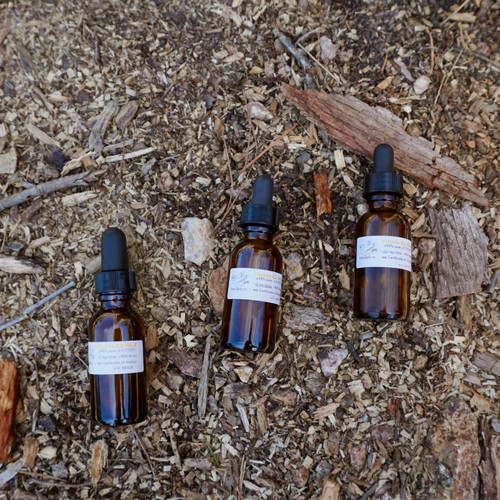
Ray Peat's leafy greens recipe
References
[edit]- ↑ Rheaume-Bleue, K. (2011). Vitamin K2 and the calcium paradox: How a Little-Known Vitamin Could Save Your Life. John Wiley & Sons.
- ↑ Wang ST, He XY, Le J, Sun T, Peng R. "Associations Between Vitamin K and Suicide Attempts in Patients with Depression: A Case-Control Study," J Inflamm Res. 2024;17:3423-3431. doi:10.2147/JIR.S463204. PMID 38828048.
- ↑ Bolzetta F, Veronese N, Stubbs B, et al. "The Relationship between Dietary Vitamin K and Depressive Symptoms in Late Adulthood: A Cross-Sectional Analysis from a Large Cohort Study," Nutrients. 2019;11(4):787. PMID 30959758. Highest vs lowest quartile OR 0.58.
- ↑ Swamynathan MM, Kuang S, Watrud KE, et al. "Dietary pro-oxidant therapy by a vitamin K precursor targets PI 3-kinase VPS34 function," Science. 2024;386(6720):eadk9167. doi:10.1126/science.adk9167. PMID 39446948.
- ↑ Li C, et al. "Dietary vitamin K intakes, chronic obstructive pulmonary disease, adult asthma, and lung function: a prospective cohort study in the UK Biobank," Am J Clin Nutr. 2026. PMID 42025963.
- ↑ Ray Peat, "Ask the Herb Doctor: Hair Loss, Inflammation, Osteoporosis", KMUD, 46:05
- ↑ 7.0 7.1 Park CS, Lewis AH, Chen TJ, et al., Lacorazza HD. "A KLF4-DYRK2-mediated pathway regulating self-renewal in CML stem cells," Blood. 2019;134(22):1960-1972. doi:10.1182/blood.2018875922. PMID 31515251.
- ↑ Ray Peat, "Heart and hormones," raypeat.com.
- ↑ Roumeliotis S, Dounousi E, Salmas M, et al. "Vascular calcification in chronic kidney disease: the role of vitamin K-dependent matrix Gla protein," Front Med (Lausanne). 2020;7:154. doi:10.3389/fmed.2020.00154. PMID 32391368.
- ↑ 10.0 10.1 Wei FF, Thijs L, Cauwenberghs N, et al. "Central hemodynamics in relation to circulating desphospho-uncarboxylated matrix Gla protein," J Am Heart Assoc. 2019. doi:10.1161/JAHA.119.011960.
- ↑ 11.0 11.1 Teperikidis E. "Hypotension associated with menaquinone," Am J Health Syst Pharm. 2012. PMID 22821789. doi:10.2146/ajhp110235.
- ↑ Haruna Y, Yakushijin T, Yamakawa M, et al. "Anticancer effects of vitamin K combined with transarterial chemoembolization in hepatocellular carcinoma, a randomized controlled trial," Br J Cancer. 2025. doi:10.1038/s41416-025-03022-4.
- ↑ Riaz IB, Riaz H, Riaz T, et al. "Role of vitamin K2 in preventing the recurrence of hepatocellular carcinoma after curative treatment: a meta-analysis of randomized controlled trials," BMC Gastroenterol. 2012;12:170. doi:10.1186/1471-230X-12-170. PMID 23191943.
- ↑ 14.0 14.1 Shiraki M, et al. "Vitamin K2 (menatetrenone) effectively prevents fractures and sustains lumbar bone mineral density in osteoporosis," J Bone Miner Res. 2000;15(3):515-21.
- ↑ Ray Peat, "Hair Loss, Inflammation, Osteoporosis", Ask the Herb Doctor, KMUD, 2011-07-15, 54:05
- ↑ 16.0 16.1 Lacombe J, Ferron M, et al. "Vitamin K carboxylation regulates β-cell calcium flux," Cell Rep. 2023. doi:10.1016/j.celrep.2023.112500.
- ↑ Orticello M, Cavallaro RA, Antinori D, et al. "Amyloidogenic and neuroinflammatory molecular pathways are contrasted using menaquinone 4 (MK4) and reduced menaquinone 7 (MK7R) in association with increased DNA methylation in SK-N-BE neuroblastoma cell line," Cells. 2023;13(1):58. doi:10.3390/cells13010058. PMID 38201262.
- ↑ Hirota Y, et al. "Vitamin K-retinoic acid hybrids for neurodegeneration," ACS Chem Neurosci. 2025. doi:10.1021/acschemneuro.5c00111.
- ↑ Shea MK, Kritchevsky SB, Loeser RF, et al., Booth SL. "Vitamin K status and mobility limitation and disability in older adults: the Health, Aging, and Body Composition Study," J Gerontol A Biol Sci Med Sci. 2020;75(4):792-797. doi:10.1093/gerona/glz108. PMID 31056634.
- ↑ Wang Q, et al. "Dietary vitamin K and skeletal muscle," Front Nutr. 2024. doi:10.3389/fnut.2024.1378853.
- ↑ Tan J, et al. "Vitamin K2 for nocturnal leg cramps," JAMA Intern Med. 2024. doi:10.1001/jamainternmed.2024.5726. PMID 39466236.
- ↑ @lowmegatron, X post — single self-reported case, not a clinical study.
- ↑ Shearer MJ, Bechtold H, Andrassy K, et al. "Mechanism of cephalosporin-induced hypoprothrombinemia: relation to cephalosporin side chain, vitamin K metabolism, and vitamin K status," J Clin Pharmacol. 1988;28(1):88-95. doi:10.1002/j.1552-4604.1988.tb03106.x. PMID 3350995.
